Brands have existed since antiquity, and their history is telling. They emerged as marks of ownership (cattle branding) and makership (a stamp on an amphora indicating its provenance). Brands, therefore, began as simple, succinct, and recognizable visual marks that tied an object to a person or group, particularly when that person or group was not there to speak for themselves. This origin story tells us more than it would seem: brands appeared as shorthand at a moment of fleeting encounter. And while brand management has evolved into an immensely sophisticated practice, its conceptual DNA remains the same: to strengthen awareness, recognition, and positive association over a series of fleeting encounters.
Nonprofit brands are rarely built on fleeting touchpoints—particularly from the point of view of the audiences that matter most.
Today’s massive brand investments span far beyond the logo mark. Take consumer brands. They are intellectual and emotional conceptions molded through a series of touchpoints—semiotic, narrative, visual, auditory. And because these brand touchpoints are fleeting, they must be communicationally economical. This fleeting-touchpoint economy is the reason why the visual brand is, in many ways, still king. Think of the apple at the top of your laptop, the golden arches as you drive down the highway, the red letters emblazoned on the side of that can of crisp, caramel-colored fizzy drink. Sometimes it seems like those visual marks stand for everything. Everything you need to know. Everything that matters.
This core idea applies more or less equally to complex purchases, investments, or big-ticket items. You, or your boss, put some thought into where to park your retirement savings: ideally, in the best possible hands. After some consideration, you decided to “talk to Chuck.” Charles Schwab is venerable and well-regarded; you’ll “own your tomorrow.” And yet, how personally and emotionally invested are you in Charles Schwab? The company hasn’t been nurturing you, building a sustained relationship, or presenting a vision of your future that you actually care about. This was a set-it-and-forget-it decision with the investment company with the blue logo. Good enough.
We get into trouble when...
We get into trouble when we try to parlay for-profit brand concepts into the nonprofit world. Nonprofit brands are rarely built on fleeting touchpoints—particularly from the point of view of the audiences that matter most: partners, allies, advocates, supporters, funders, and beneficiaries. These are not set-it-and-forget-it relationships. They take immense work and sustained effort, as every development professional knows. They involve concepts such as shared values, mutual accountability, and collective stories about how the world works.
The connection between a nonprofit and its audiences is relational, sustained, evolving, and fundamentally values- and narrative-driven.
It’s not just the well-rehearsed fact that, in our sector, the purchaser/investor is not the consumer/beneficiary. It’s mostly the fact that the connection between a nonprofit and its audiences is relational, sustained, evolving, and fundamentally values- and narrative-driven. There are few for-profit relationships that have a similar flavor; those that come to mind (say, Patagonia, REI) are, interestingly enough, also values-driven.
Consultants who approach nonprofit branding from a perspective that ignores the relational, sustained, evolving, and values- and narrative-driven character of nonprofit brands fail nonprofits. Brand programs that are primarily visual or tagline/boilerplate-driven. Prioritizing logo/color/typography, a small palette of brand messages, and repetition/recognition above all else. It’s not that these things don’t matter. It’s that they go hand-in-hand with, and spring forth from, the organization’s world-building and relationship-building.
Enter stories...
A welcome corrective to the shorthand brand has been the embrace of brand as story. As we have seen it in the wild, this takes a few well-trodden forms: beneficiary impact stories, advocate and supporter stories, staff and volunteer stories, the story of the organization itself. In the best of cases, all these are created with some sort of narrative template/framework that tells content creators how to frame stories for vision- and values-consistency.
...then enter grand narratives
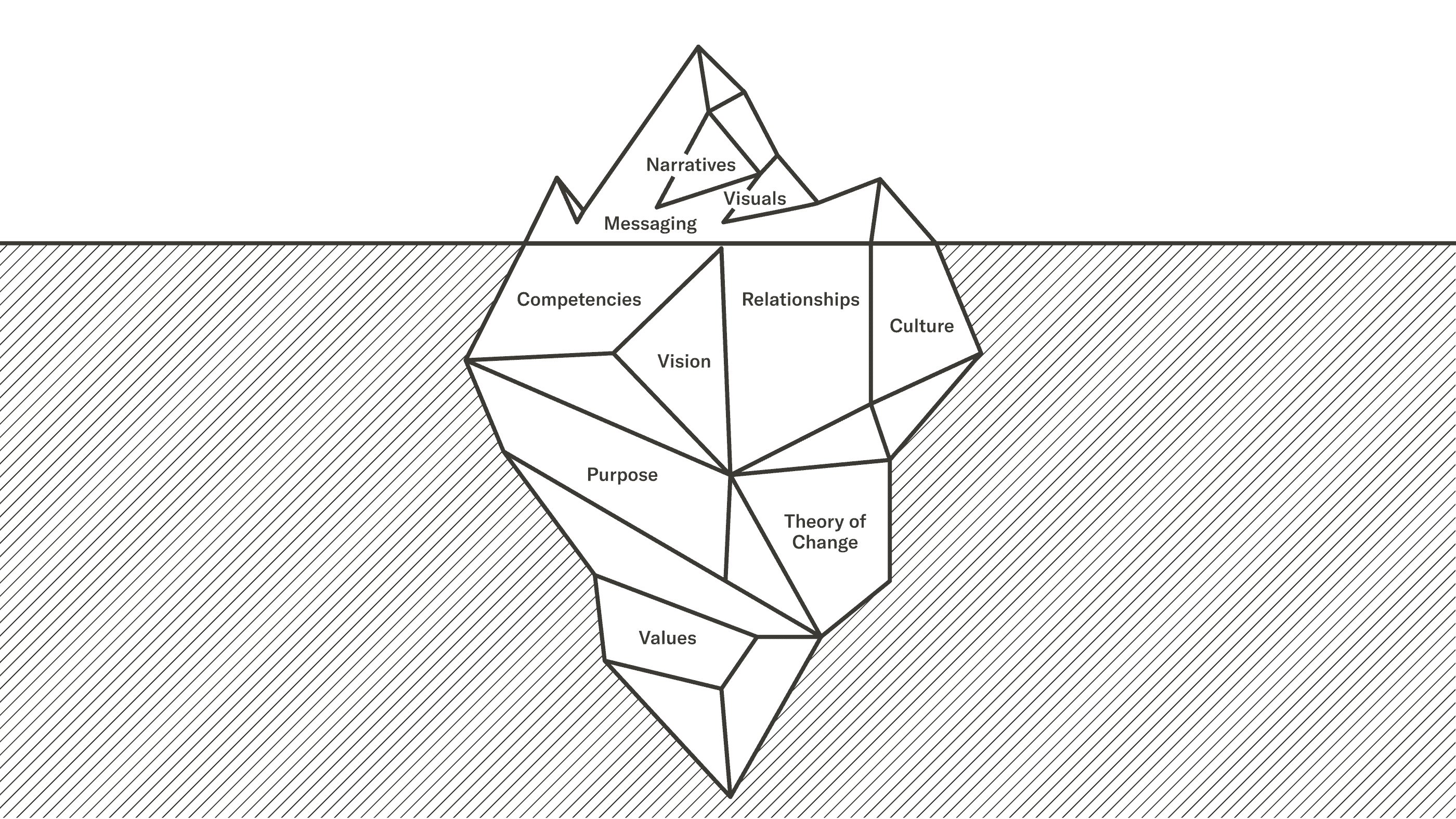
What’s missing from brand-as-(a smattering of)-stories is a grand (or master) narrative1 about the organization. It stands above them like a great big umbrella. It ties together purpose, vision, theory of change, values, culture, competencies, impact, and relationships into a coherent whole about a world to aspire to, an approach to societal change, and a series of characters (team, partners, allies, participants) who have roles to play. It’s a coherent core that can be sensed and felt in relationships, messages, stories, and yes, visuals.
The grand narrative is the underwater portion of the iceberg. It’s robust, solid, visible through its everyday expressions. It’s also the 10,000 view: it takes the messiness of everyday activities and efforts and synthesizes them, makes them coherent, makes narrative sense of them. It guides future activities and efforts. It’s like stock: it flavors all communications. It is, yes, sometimes complex and nuanced—we live in a complex and nuanced world. But the nuance can be dialed up and down as needed. Finally, the narrative is capable of evolving as the organization evolves, incorporating the voices of team, partners, allies, and participants. This, of course, should be done through formal deliberation and dialogue.
The bits that make a grand narrative
In our practice, we develop grand narratives out of the source material of the organization: purpose, vision, theory of change, values, culture, competencies, impact, and relationships. Our work consists in drawing links between these materials so that they form a coherent thread; refining them so that they’re useful to communicators and content developers; and guiding organizations to articulate them from scratch if they don’t yet exist. The emphasis is on internal language and guidelines for staff members and teams; not on rewriting formal mission statements. From these we collaborate with organizations to build a world—the world according to the organization. This world has problems, root causes, levers, and chains of cause and effect. It has shared values and a shared vision. It has a variety of actors who work together in specific relationships, serving interconnected roles and bringing complementary competencies into their work. Those actors, too, have personalities, values, and visions. It is from this well that we help organizations develop messaging, stories, visuals, and the rest of the brand. It is from here that we guide them to develop content that sits under the umbrella of the grand narrative.
Brands in their fullest sense
The nonprofit sector has something most consumer brands spend enormous sums trying to manufacture: authentic values, genuine community relationships, and a grand narrative worth joining. The organizations that make the most of that advantage are not the ones with the cleverest logos or the most polished taglines. They are the ones that have done the harder, less glamorous work—articulating a coherent world, building the narrative infrastructure to express it, and showing up consistently, over time, in ways their audiences recognize and trust.
A brand, in its fullest sense, is not a mark or even a story. It is a world, carefully built, that others are invited to inhabit. The logo reminds you it exists. The grand narrative is what makes it worth joining.
Want to chat grand narratives? 🤔
How they can work for you? Or how they power all kinds of human phenomena, from religious extremism to your sense of self? Book a 30-minute intro call.