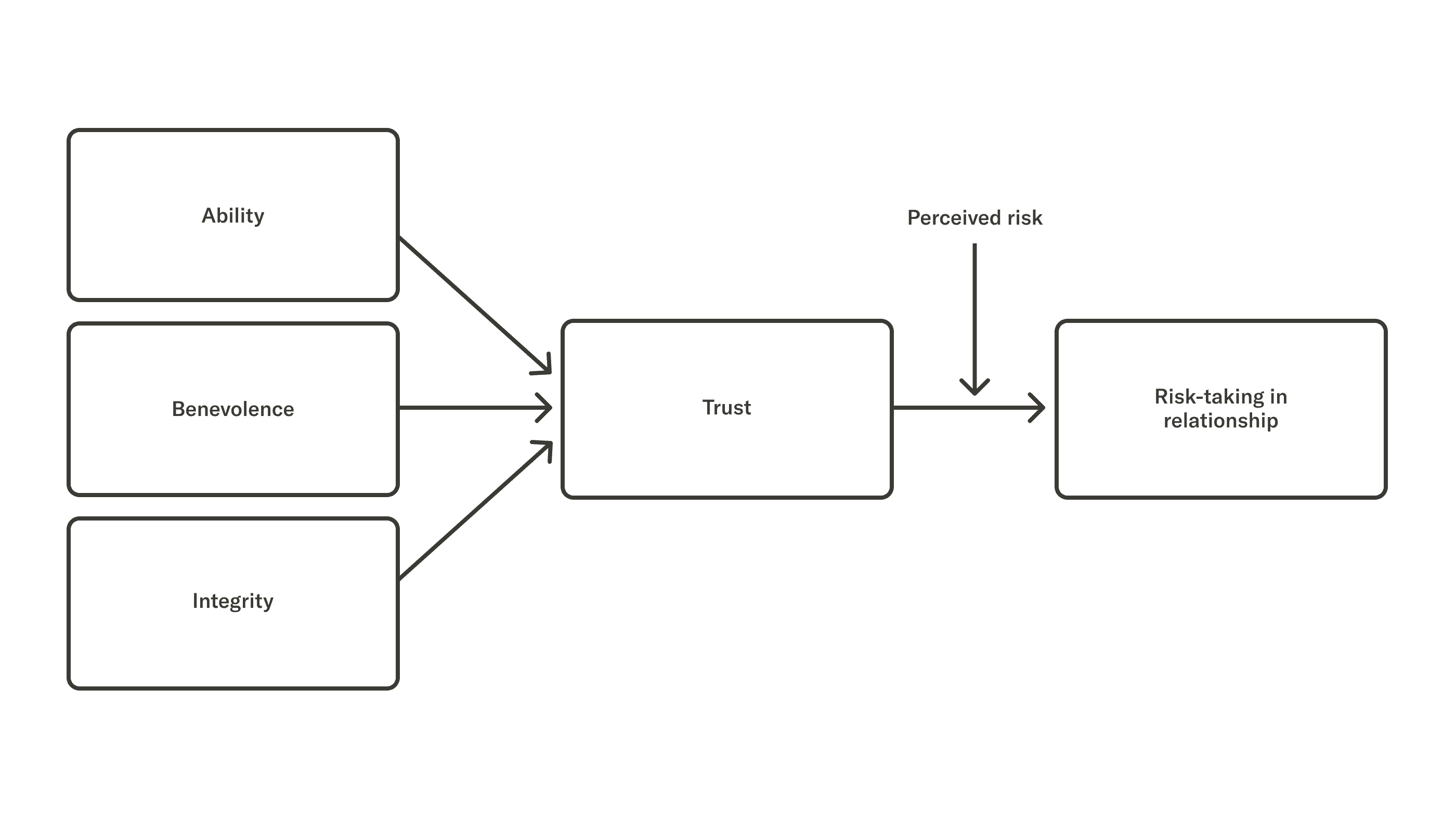
Trust is nonnegotiable capital for a nonprofit. When the time comes to speak, trust is what earns you a place in the conversation. A brand that’s doing its job is one that’s actively building trust with the publics that matter. Always demand that your brand do this job—otherwise it’s just decoration.
The Aristotle-Mayer-Grunig model
Trust is a well-trodden subject, with a long history and a substantial body of research behind it. Aristotle theorized the basic dimensions of trust and persuasion in his Rhetoric. As he proposed, “the causes due to which speakers themselves are persuasive are three... these are practical wisdom, virtue, and goodwill.”
Trust is nonnegotiable capital for a nonprofit. When the time comes to speak, trust is what earns you a place in the conversation.
Contemporary thinking on trust has changed surprisingly little. One of the most commonly referenced trust frameworks is Mayer et al.’s 1995 Integrative Model of Organizational Trust. Its main components? Competence, integrity, and benevolence—mapping perfectly to Aristotle’s original three. Four years later, in 1999, James Grunig pioneered one of the most enduring trust-measurement instruments in the field of PR. His three trust components were, once again, competence, integrity, and benevolence.
These three components, then, have endured the tests of use, observation, and research for over two thousand years. And while the original three are still proving their worth, communications researchers have recently expanded what we’re calling the Aristotle-Mayer-Grunig model with two more components: openness and value representation.
Looking at the five
Let’s get this out of the way: these five components can’t be faked. You can’t communicate them if you haven’t cultivated them first. As communicators, we can only help you show what you already have.
Let's examine each in turn:
- Competence: The perception that an organization has relevant ability, expertise, knowledge, practical wisdom, and skill to get the job done. Communicate competence through case studies, accreditations, past grants, awards, expert testimonials, ratings, and impact data—and, more fundamentally, by being a deep and quiet well of experience and knowledge in your area of practice.
- Integrity: The perception that an organization behaves with high ethical standards—honesty, transparency, fairness, and consistency between what you say and what you do. Communicate integrity by avoiding reputationally costly lapses, admitting mistakes openly rather than spinning them, sharing the ethical frameworks and decision-making principles that guide your work, and following through on commitments even when no one is watching closely.
- Benevolence: The perception that an organization is on the side of its constituents and genuinely cares about them. Communicate this through a proper “bedside manner” across your team—let care and regard for your audiences show in every interaction, whether mass communication, digital, or one-to-one. This also means following up after a hard conversation, remembering context instead of treating every interaction as the first, and making room for empathy even when it’s operationally inconvenient.
- Openness: The perception that an organization welcomes community perspectives and external feedback. This helps counter the risk of appearing closed-off, out-of-touch, or arrogant. Communicate openness through regular outreach and listening sessions with constituents, training your team to actually listen rather than wait to respond, sharing stories of how feedback changed your approach, and being transparent about the limits of what you can address.
- Value representation: The perception that an organization shares its audiences’ deeply held values and moral commitments. This perception builds trust by forging a strong bond of shared purpose between organizations and audiences. Cultivate value representation through value framing.
Measuring trust
Much of the research on trust-building has centered on how to measure it. Grunig’s Relationship Survey, the most common instrument for assessing organizational trust, uses self-reported perceptions of competence, integrity, and benevolence as combined trust proxies, with Likert-scale statements such as:
- This organization treats people like me fairly and justly.
- Whenever this organization makes an important decision, I know it will be concerned about people like me.
- This organization can be relied on to keep its promises.
- I believe that this organization takes the opinions of people like me into account when making decisions.
- I feel very confident about this organization’s skills.
Conclusion
None of these five components is a marketing trick. They describe what an organization actually is, not just what it says about itself — which is exactly why they can’t be faked and why a glossy logo or a clever tagline can’t substitute for the real thing.
That also means trust-building isn’t a campaign with a start and end date. It’s the daily, unglamorous work of being competent, behaving with integrity, caring visibly, staying open to feedback, and standing for something your audience already believes in. Your brand’s job is to surface that work — to make sure the trust you’ve earned through your actions is actually legible to the people deciding whether to listen to you.
Do that consistently, and when the moment comes to make your ask, you won’t be starting the conversation from zero. You’ll be cashing in capital you’ve been quietly building all along.
Want to chat trust-building? 🤔
Or, alternatively, why we believe foxes are honorary cats? Book a 30-minute intro call.