What are nonprofit brands for? The answer often borrows from the for-profit sector, mixed with a dash of magical thinking. Brands, they say, are a series of positive associations about your organization. Brands are a gut feeling. They’re vibes. Preferably good vibes. You can’t really control your brand, since it’s “not what you say it is, it’s what they say it is.” But wait—you can control your brand. That’s why you’re investing in it, right?
“Brands are a gut feeling” is not a strategic framework—it’s magical thinking. A good framework is concrete and actionable.
If this all feels vague and ephemeral, it’s because it is. There was a time when betting big on gut feelings made sense in our sector. But we all know that party’s over. Organizations need to be more strategic than ever. Brands need to work harder. Vibes are not a strategy.
Besides, nonprofit brands aren’t like for-profit brands. They’re not built from brief, cumulative customer touchpoints. They’re built from conversations, nurturing, information-sharing, and sometimes complex narratives about how the world works. The story we’re telling cannot be reduced to shorthand.
So what are nonprofit brands for?
“Brands are a gut feeling” is not a strategic framework—it’s magical thinking. A good framework is concrete and actionable. It helps you set SMART goals. So: what is a good brand rubric? How do you know your brand is working hard for you? How do you measure it?
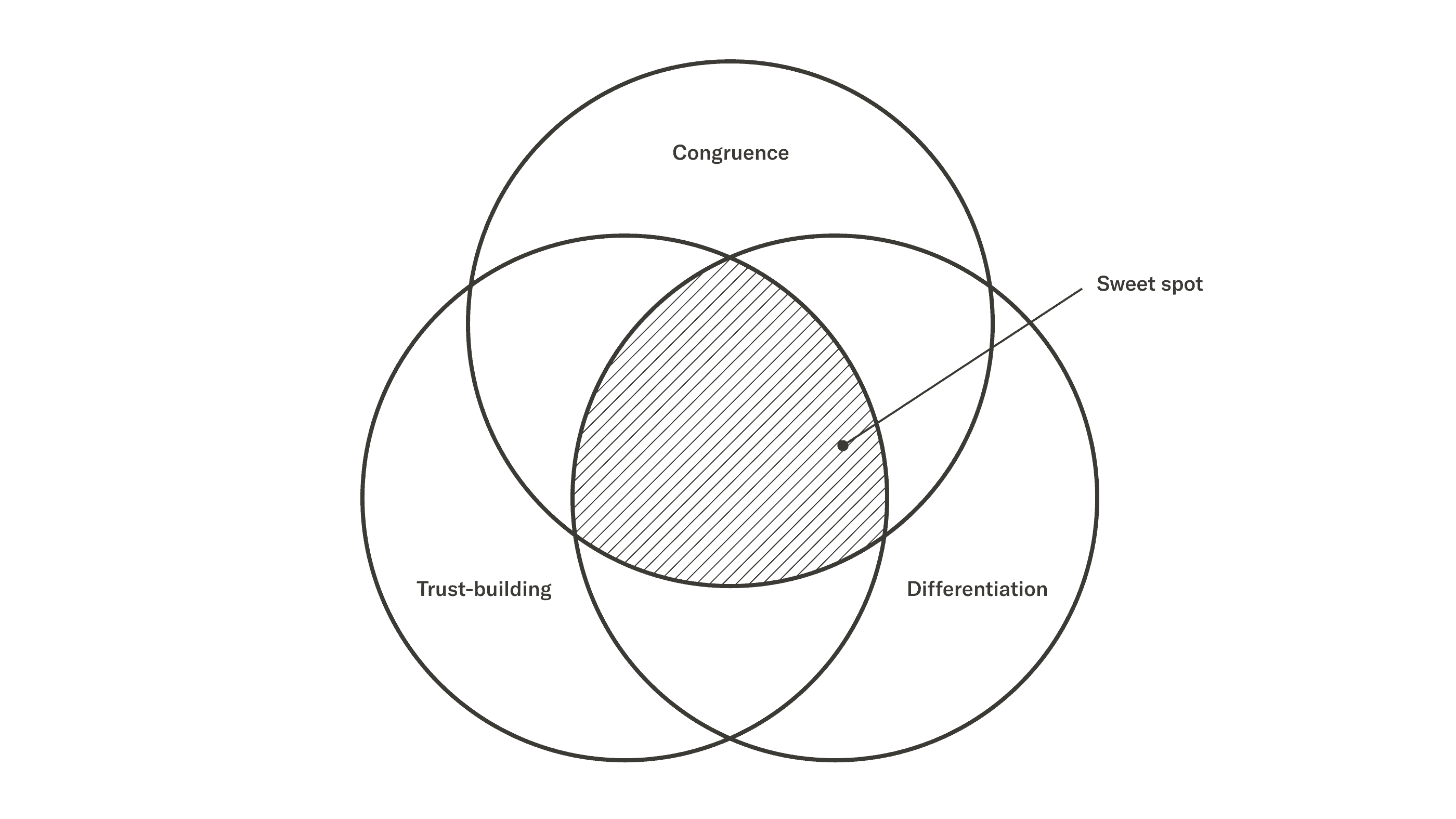
One of the most powerful brand strategy frameworks in our sector is Laidler-Kylander and Stenzel’s Brand IDEA, which we’ve adapted to our experience and the needs of our clients. Our framework has three elements: congruence, trust, and differentiation.
Congruence: your brand reflects your organization
For your brand to resonate, it needs to be in true alignment with your organization—its values, competencies, and internal culture—as seen by both your team and your allies. Brand management, in this sense, is also a process of soul-searching: defining what you’re about and what drives you, inside and out. If your brand and voice don’t align with who you are, the disconnect will make it weak, undefined, and forgettable.
Trust-building: the everyday job of your brand
Building trust is the ongoing, background work of your nonprofit brand. It’s what makes your publics listen when you make an ask. A brand that’s doing its job actively builds trust with the publics that matter—and trust-building is well-researched, with evidence-backed frameworks to guide it.
Differentiation: finding your lane
This is by far the hardest of the three elements. Nonprofit brands are seldom well-differentiated because nonprofits seldom are. Differentiation is hard.
When differentiation is absent, it’s even more crucial to invest in congruence and trust-building.
As Laidler-Kylander and Stenzel write, differentiation in our sector is about establishing your place alongside potential partners and collaborators in a non-competitive way—finding your lane, building your competencies in it, and seeking out partnerships with those who have complementary strengths. A differentiated brand sends a clear signal to peers and partners that helps you secure that place and role. Yet differentiation also has a competitive dimension: it plays an enormous role in fundraising.
Most small- to medium-size organizations, for-profit or not, struggle to understand what sets them apart in a sea of peers. That’s why, of the three elements of our framework, this one is always a work in progress. And when differentiation is absent, it’s even more crucial to invest in congruence and trust-building.
Can all this be measured?
Yes. All three dimensions lend themselves to a mix of qualitative and quantitative methods: interviews, focus groups, surveys, visual and content analysis, perceptual mapping—and, of course, behaviors: what your allies are actually doing, whether that’s repeat giving or repeat volunteering. Look out for an article on this topic soon.
Brand strategy follows from organizational strategy
The branding process cannot create identity, differentiation, or competencies, but it can make them tangible, elevate them, project them out to the world like the Bat-Signal. Weak overall strategy produces weak brands, and no amount of brand investment can change that. But strong identity, clear differentiation, and real competencies without a well-considered brand program? That’s a trip in the hamster wheel. It’s Sisyphus rolling his rock up the hill. It’s screaming into the void. Let’s just say it’s a whole lot of wasted effort.
Want to chat brands? 🤔
Your brand? What it’s like to team up with us? Or how Aristotle had brand trust figured out 2,300 years ago? Book a 30-minute intro call.